
Petticoat
Unknown Artist
1895
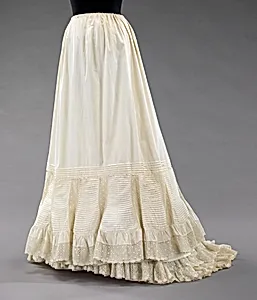
Medium
cotton
Classification
Petticoat
Culture
American
Department
Costume Institute
Museum
Metropolitan Museum of Art, New York, NY
Credit
Brooklyn Museum Costume Collection at The Metropolitan Museum of Art, Gift of the Brooklyn Museum, 2009; Gift of Babs Simpson, 1955
Accession Number
2009.300.3172
Rights
Public Domain
Art Historical Context
Step into the elegant world of late 19th-century American fashion with this charming *Petticoat* from 1895, from cotton by an unknown artist. Housed in the Metropolitan Museum of Art's Costume, this undergarment exemplifies everyday attire from the Gilded Age, a period of rapid industrialization and shifting social norms in the United. Cotton, a widely available and breathable fabric, was a staple for such practical pieces, reflecting the era's emphasis on functionality alongside femininity. Petticoats like one played a crucial role in shaping the silken silhouettes of the time. By the 1890s, women's fashion was transitioning from the heavy bustles of the 1880s toward slimmer skirts inspired by the emerging Gibson Girl ideal—athletic yet refined. This petticoat would have provided subtle volume and support beneath outer dresses, highlighting the ingenuity of American dressmaking in balancing modesty, comfort, and style. Preserved through the Brooklyn Museum Costume Collection (gifted to the Met in 2009, originally from Babs Simpson in 1955), it offers a tangible glimpse into women's daily lives. Though unadorned by a known creator, its survival underscores the cultural value of ordinary garments in telling stories of fashion's evolution and American ingenuity.