
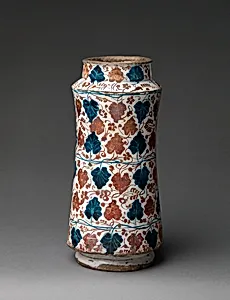
Pharmacy Jar
Unknown Artist
1435–75
Medium
Tin-glazed earthenware
Dimensions
Overall: 11 11/16 x 5 5/8 in. (29.7 x 14.3 cm)
Classification
Ceramics
Culture
Spanish
Department
The Cloisters
Museum
Metropolitan Museum of Art, New York, NY
Credit
The Cloisters Collection, 1956
Accession Number
56.171.92
Rights
Public Domain
Tags
Art Historical Context
This elegant Pharmacy Jar, crafted in Spain between 1435 and 1475, exemplifies the artistry of late medieval ceramics. Made of tin-glazed earthenware—a technique where a tin oxide coating creates a brilliant white surface ideal for vibrant decorations—the jar stands about 12 inches tall, perfect for storing medicinal herbs, powders, or oils in apothecaries. Its Spanish origins reflect the cultural fusion of Christian and Islamic influences, as tin-glazing spread from the Islamic world to Iberian potters, enabling durable, eye-catching vessels for everyday use. Pharmacy jars like this one were essential tools in Renaissance-era medicine, often inscribed with contents or symbols to aid pharmacists. Though the artist remains unknown, the subtle leaf motifs (hinted at in its design) evoke nature's healing properties, connecting the jar to herbal traditions. Today, it graces The Cloisters at the Metropolitan Museum of Art, part of the 1956 Cloisters Collection, offering a tangible glimpse into 15th-century life, health practices, and ceramic innovation.