
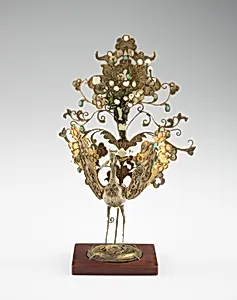
Phoenix and Rosette
618-906
Medium
Decorative Arts
Classification
Decorative Arts
Department
Smithsonian Collection
Museum
Smithsonian American Art Museum
Credit
Smithsonian American Art Museum, Gift of John Gellatly
Accession Number
1929.8.621A-B
Rights
Public Domain
Tags
Art Historical Context
Behold the exquisite *Phoenix and Rosette*, a captivating piece of decorative arts from China's Tang Dynasty (618–906 CE), a golden era of cultural flourishing and artistic innovation. Crafted by an unidentified artisan, this artwork showcases the mythical phoenix—a fenghuang in Chinese lore—alongside intricate rosette motifs. The phoenix, symbolizing rebirth, virtue, and imperial grace, was a favored emblem in Tang decorative objects, often adorning ceramics, textiles, or metalwork to evoke prosperity and harmony. During the Tang period, China's capital Chang'an buzzed as a Silk Road crossroads, blending Central Asian, Persian, and Indian influences into vibrant designs. Rosettes, floral bursts evoking lotuses or peonies, complemented the phoenix's fiery elegance, highlighting masterful techniques like incising, gilding, or underglaze painting that brought these motifs to life with dynamic energy and symmetry. Generously gifted to the Smithsonian American Art Museum by collector John Gellatly, this treasure invites us to ponder the timeless allure of Tang craftsmanship. Though its exact form remains a mystery, it whispers of an age when art transcended utility, weaving mythology into everyday splendor. (198 words)
About the Artist
Unidentified ( ) · –