
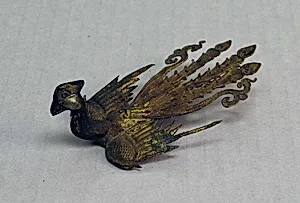
Phoenix Ornament
Unknown Artist
Medium
Gilt silver
Dimensions
3 1/2 x 1 1/4 in. (8.9 x 3.2 cm)
Classification
Jewelry
Culture & Period
China · Song dynasty (960–1279)
Department
Asian Art
Museum
Metropolitan Museum of Art, New York, NY
Credit
Rogers Fund, 1924
Accession Number
24.32.3
Rights
Public Domain
Tags
Art Historical Context
This delicate Phoenix Ornament, crafted from gilt silver during China’s Song dynasty (960–1279), the refined metalwork prized by the era’s elite. Measuring just over three inches, the small piece likely served as a hair ornament or pendant, its shimmering gold surface catching light to highlight intricate details. Song artisans excelled at combining functionality with symbolism, and this ornament reflects the dynasty’s cultural emphasis on elegance and harmony. The phoenix, a mythical bird representing virtue, renewal, and feminine power, was especially significant in Chinese imperial culture, often linked to the empress. Its appearance here suggests the ornament may have belonged to a woman of high status, embodying wishes for prosperity and grace. Gilt silver allowed artisans to achieve the look of solid gold at a more accessible cost, showcasing both technical skill and the Song period’s sophisticated luxury tastes. Today housed in the Metropolitan Museum of Art’s Asian Art collection, the piece offers visitors a tangible connection to medieval Chinese aesthetics. Its compact scale and enduring shine remind us how personal adornments carried deep cultural meaning across centuries.