
Piccolo in D-flat
Unknown Artist
early 19th century
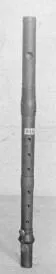
Medium
Wood, silver
Dimensions
L. 333 mm., Embouchure length 282 mm.
Classification
Aerophone-Blow Hole-side-blown flute (transverse)
Culture
French
Department
Musical Instruments
Museum
Metropolitan Museum of Art, New York, NY
Credit
The Crosby Brown Collection of Musical Instruments, 1889
Accession Number
89.4.919
Rights
Public Domain
Art Historical Context
Nestled in the Metropolitan Museum of Art's renowned Crosby Brown Collection of Musical Instruments this Piccolo in D-flat exemplifies the exquisite craftsmanship of early 19th-century France. Crafted from wood with silver accents, this transverse flute—classified as a side-blown aerophone—measures compact 333 mm in length, with an embure hole spanning 282 mm. Its size and high-pitched D-flat tuning made it ideal for piercing melodies that cut through orchestral ensembles, a staple in military bands and concert halls of the Napoleonic era and beyond. French instrument makers during this period were at the forefront of woodwind innovation, refining bore designs and key mechanisms for greater tonal precision and playability. Though the artist remains unknown, the use of fine wood for the body and silver for keys or fittings highlights the era's emphasis on durability, resonance, and elegance—materials chosen to produce a brilliant, flute-like timbre an octave above the standard concert flute. Today, this piccolo offers a window into Romantic-era music culture, evoking the lively strains of Beethoven symphonies or French opera orchestras. Visitors can appreciate how such instruments bridged artisanal tradition and musical evolution, their delicate construction a testament to the harmonious blend of art and sound.