
Piece
Unknown Artist
ca. 1830–35
Medium
Cotton, roller-printed
Dimensions
Various dimensions
Classification
Printed piece
Culture
British
Department
The American Wing
Museum
Metropolitan Museum of Art, New York, NY
Credit
Gift of Mr. and Mrs. Richard Mayer Livingston, 1967
Accession Number
Inst.67.3.2
Rights
Public Domain
Tags
Art Historical Context
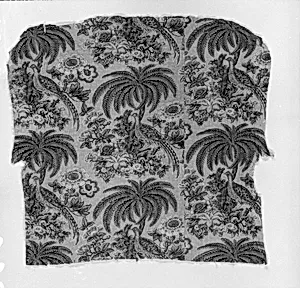
This vibrant roller-printed cotton textile, created by an unknown British artist around 1830–35, showcases a lush pattern of peacocks strutting amid blooming flowers and leafy trees. Titled simply *Piece*, it exemplifies the era's fascination with exotic nature motifs, evoking the grandeur of English gardens and far-off lands. Displayed in The Metropolitan Museum of Art's American Wing, this fabric—measuring various dimensions—was likely used for curtains, upholstery, or clothing, bringing opulent design into everyday homes. Roller-printing, a revolutionary industrial technique perfected in Britain during the early 19th century, allowed for the mass production of intricate, multi-color patterns on cotton at affordable prices. This innovation fueled the textile trade boom of the Industrial Revolution, making luxurious designs accessible beyond the elite. British fabrics like this one were highly prized in America, often imported for fashionable interiors, reflecting transatlantic cultural exchange. A generous gift to the Met in 1967 from Mr. and Mrs. Richard Mayer Livingston, this piece highlights the artistry of anonymous craftsmen who blended technical precision with imaginative flair. Visitors will appreciate its timeless appeal—peacocks symbolizing beauty and renewal—offering a window into Regency-era elegance.