
Piece
Unknown Artist
ca. 1700 (?)
Medium
Silk and metal thread
Dimensions
Original measurement: 81 x 41 inches (205.7 x 104.1 cm) Current measurements: .4) L. 48 x W. 39 1/2 inches (121.9 x 100.3 cm) ; .4a) L. 48 x W. 39 1/2 inches (121.9 x 100.3 cm)
Classification
Textiles-Woven
Culture
Spanish or Portuguese
Department
European Sculpture and Decorative Arts
Museum
Metropolitan Museum of Art, New York, NY
Credit
Rogers Fund, 1908
Accession Number
08.168.4, .4a
Rights
Public Domain
Tags
Art Historical Context
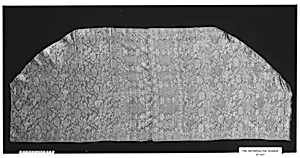
This exquisite textile fragment, titled simply *Piece*, hails from around 1700 and is attributed to an unknown or Portuguese artisan. Originally an impressive 81 x 41 inches, it now consists of two sections, each about 48 x 39½ inches, preserved in the Metropolitan Museum of Art European Sculpture and Decorative collection (acquired via the Rogers in 1908). Woven from luxurious silk and metal threads, it exemplifies the opulence of early 18th-century Iberian, where such textiles adorned churches, palaces, or noble homes. The use of shimmering metal threads—likely gold or silver—woven alongside vibrant silk created a richly textured, light-reflecting surface, a technique prized in Baroque-era Europe for its dramatic effect. Birds, a recurring motif suggested by the work's tags, symbolize grace, freedom, or divine spirit in Iberian decorative arts, often appearing in ecclesiastical vestments or wall hangings. This piece reflects the era's fusion of technical virtuosity and cultural symbolism, bridging Islamic weaving influences from earlier centuries with Christian iconography. As a rare survivor of woven luxury textiles, *Piece* offers a window into the skilled guilds of Spain and Portugal, where materials were imported at great cost to produce status symbols. Visitors can appreciate how its scaled-down form still evokes the grandeur of a bygone age.