
Piece
Unknown Artist
19th century
Medium
Cotton
Dimensions
L. 4 3/4 x W. 6 3/4 inches (approx.) 12.1 x 17.1 cm
Classification
Textiles-Printed
Culture
German
Department
European Sculpture and Decorative Arts
Museum
Metropolitan Museum of Art, New York, NY
Credit
Rogers Fund, 1909
Accession Number
09.50.859
Rights
Public Domain
Tags
Art Historical Context
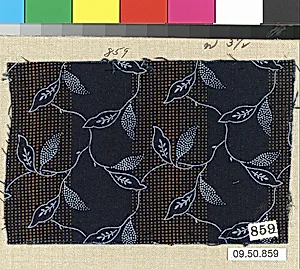
This charming 19th printed cotton textile fragment, simply titled *Piece*, offers a glimpse into Germany's vibrant tradition of decorative fabrics. Measuring just 4¾ by 6¾ inches (12.1 x 17.1 cm), this small swatch from an unknown artist's hand features a delicate motif of leaves, evoking the natural world in intricate patterns typical of the era's printed textiles. Acquired through the Rogers Fund in 1909 and now housed in the Metropolitan Museum Art's Department of European Sculpture and Decor Arts, it exemplifies the classification of Textiles-Printed, highlighting everyday artistry in household goods. In the 19th century, Germany was at the forefront of textile innovation, blending age-old block-printing techniques with emerging industrial methods like roller printing. Cotton, an affordable and versatile medium, became a canvas for mass-produced yet beautifully designed patterns, adorning curtains, upholstery, and clothing. The leaf motif reflects the Romantic era's fascination with nature, symbolizing growth and renewal amid rapid urbanization. As a cultural artifact, this piece underscores the decorative arts' role in everyday life, bridging fine art and function. Its preservation in the Met allows visitors to appreciate how such modest textiles contributed to the aesthetic richness of 19th-century European homes, inviting us to marvel at the artistry in the ordinary.