
Piece
Unknown Artist
1725–30
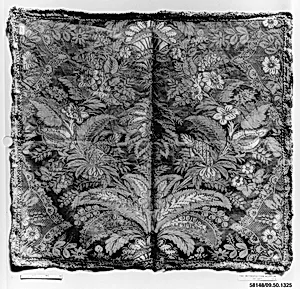
Medium
Silk and metal thread
Dimensions
20 x 21 inches (50.8 x 53.3 cm)
Classification
Textiles-Woven
Culture
French
Department
European Sculpture and Decorative Arts
Museum
Metropolitan Museum of Art, New York, NY
Credit
Rogers Fund, 1909
Accession Number
09.50.1325
Rights
Public Domain
Tags
Art Historical Context
This exquisite woven textile fragment, titled simply *Piece*, hails from France around 1725–30, a vibrant era during the Regency period following the grandeur of Louis XIV's reign Crafted from luxurious silk and shimmering metal threads, it measures a modest 20 x 21 inches and features delicate motifs of flowers and leaves—hallmarks of the emerging Rococo style, which favored playful, naturalistic ornamentation over the heavy Baroque forms of the past. Such pieces were often produced by master weavers in Lyon, France's textile capital, for opulent interiors like upholstery, curtains, or wall hangings in aristocratic homes. The use of metal threads—likely gold or silver—lent a jewel-like luster, elevating the fabric's status as a symbol of wealth and refinement. Woven textiles like this demanded extraordinary skill, with intricate patterns created directly on the loom, blending durability with artistic finesse. This technique not only showcased technical virtuosity but also reflected France's dominance in exporting luxury goods across Europe. Today, housed in the Metropolitan Museum of Art's European Sculpture and Decorative Arts department (acquired through the Rogers Fund in 1909), this anonymous masterpiece offers a window into 18th-century French elegance, reminding us how textiles wove beauty into everyday luxury.