
Piece
Unknown Artist
18th century
Medium
Silk
Dimensions
Overall: 13 3/4 x 11 3/4 in. (34.9 x 29.8 cm)
Classification
Textiles-Woven
Culture
German
Department
European Sculpture and Decorative Arts
Museum
Metropolitan Museum of Art, New York, NY
Credit
Rogers Fund, 1909
Accession Number
09.50.1709
Rights
Public Domain
Art Historical Context
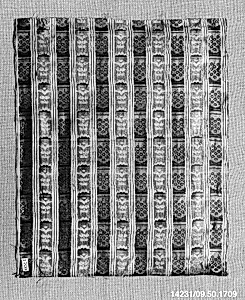
This exquisite silk textile fragment, simply titled *Piece*, hails from 18th-century Germany and the refined craftsmanship of European decorative arts. Measuring 13¾ x 11¾ inches (34.9 x 29.8 cm), it is a finely woven example preserved in the Metropolitan Museum of Art's Department of European Sculpture and Decor Arts, acquired through the Rogers Fund in 9. As a product of skilled looms, such silks were prized for their luster and durability, often used in opulent garments, upholstery, or ecclesiastical vestments during the Baroque and Rococo eras. Silk weaving reached new heights in 18th-century Europe, with German regions like Saxony and the Rhineland fostering innovative techniques amid growing trade networks. This piece reflects that heritage, where intricate Jacquard-like patterns (though not specified here) would showcase weavers' mastery over warp and weft to create shimmering effects. Its classification as a woven textile underscores the labor-intensive process, transforming raw silk threads into luxurious surfaces that conveyed status and artistry. For museum visitors, this modest yet elegant survivor offers a tactile glimpse into daily opulence and cultural exchange in Enlightenment-era Germany, reminding us how textiles wove themselves into the fabric of history.