
Piece
Unknown Artist
16th–17th century
Medium
Silk
Dimensions
L. 4 1/8 x W. 9 3/4 inches (10.5 x 24.8 cm)
Classification
Textiles-Velvets
Culture
Italian
Department
European Sculpture and Decorative Arts
Museum
Metropolitan Museum of Art, New York, NY
Credit
Rogers Fund, 1909
Accession Number
09.50.2154
Rights
Public Domain
Art Historical Context
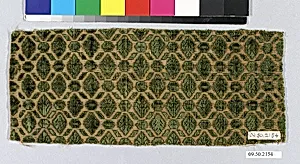
This exquisite silk velvet fragment, originating from Italy in the 16th or 17th century, the opulent textile arts of Renaissance and early Baroque Europe. Measuring just 4⅛ by 9¾ inches, this small "Piece" likely served as part of a larger luxury fabric, perhaps for ecclesiastical vestments, aristocratic garments, or lavish furnishings. Italian velvet production, centered in cities like Venice and Genoa, unparalleled heights during this era, with artisans mastering intricate weaving techniques to create rich, pile surfaces that caught the light dramatically. Velvets like this were symbols of wealth and status, their lustrous silk threads dyed in vibrant hues and patterned with motifs inspired by nature or Oriental trade influences. The medium's significance lies in its technical sophistication—silk warps supporting a cut or voided pile—demanding skilled labor and rare materials imported via Mediterranean trade routes. Such textiles not only adorned the elite but also influenced European fashion and design across continents. Acquired through the Rogers Fund in 1909 and now housed in the Metropolitan Museum of Art's Department of European Sculpture and Decorative Arts, this anonymous masterpiece invites us to marvel at Italy's enduring legacy in decorative arts, preserving a tactile glimpse into a gilded past.