
Piece
Unknown Artist
19th century
Medium
Cotton
Dimensions
L. 3 3/8 x W. 6 3/8 inches (approx.) 8.6 x 16.2 cm
Classification
Textiles-Printed
Culture
German
Department
European Sculpture and Decorative Arts
Museum
Metropolitan Museum of Art, New York, NY
Credit
Rogers Fund, 1909
Accession Number
09.50.2923
Rights
Public Domain
Tags
Art Historical Context
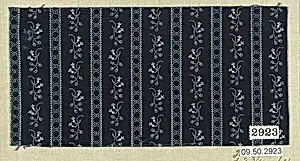
This delicate 19th-century printed textile fragment, simply titled *Piece*, hails from Germany and measures a modest 3⅜ × 6⅜ inches (8.6 × 16.2 cm). Adorned with intricate motifs of flowers and leaves, exemplifies the vibrant botanical designs that flourished in European decorative arts during the Industrial Revolution. Acquired through the Rogers Fund in 1909 now housed in the Metropolitan Museum of Art's Department of European Sculpture and Decorative Arts, this small survivor offers a glimpse into everyday artistry. Printed textiles like this one were revolutionary in the 19th century, as mechanized printing techniques—such as woodblock or copperplate methods—made colorful patterns affordable for clothing, furnishings, and upholstery. German textile production thrived in regions like the Rhineland, blending folk traditions with emerging industrial precision. The floral and leafy patterns reflect the era's Romantic fascination with nature, evoking gardens and wildflowers amid rapid urbanization. Though created by an unknown artist, its classification as a printed textile underscores the collaborative craft of designers, printers, and dyers. Such pieces were often collected as design samples, preserving the ingenuity of 19th-century German culture for modern admirers. A charming testament to how beauty bloomed on humble cotton!