
Piece
Unknown Artist
1750–60
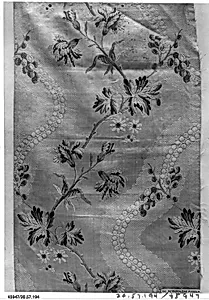
Medium
Silk
Dimensions
12 1/2 x 21 3/4 inches (31.8 x 55.2 cm)
Classification
Textiles-Woven
Culture
French
Department
European Sculpture and Decorative Arts
Museum
Metropolitan Museum of Art, New York, NY
Credit
Rogers Fund, 1920
Accession Number
20.57.194
Rights
Public Domain
Art Historical Context
This exquisite silk textile fragment, created in France between 1750 and 1760, exemplifies the opulent craftsmanship of mid-18th-century European decorative arts. Woven during the lavish Rococo era, when silk was a symbol of wealth and refinement, this "Piece" measures a modest 12½ x 21¾ inches (31.8 x 55.2 cm), suggesting it may have been part of a larger garment, furnishing, or ecclesiastical textile. Acquired through the Rogers Fund in 1920, it now resides in The Metropolitan Museum of Art's Department of European Sculpture and Decorative Arts, classified among woven textiles. French silk production, centered in hubs like Lyon, reached unparalleled sophistication in this period, employing complex drawloom techniques to create intricate patterns with shimmering metallic threads and vibrant dyes. Though the artist remains unknown, the medium's significance lies in its technical mastery—silk's luster and durability made it ideal for sumptuous interiors and high fashion, reflecting the era's taste for elaborate ornamentation amid the aristocracy's pre-Revolutionary extravagance. Today, this delicate survivor offers a tactile glimpse into Enlightenment-era luxury, inviting visitors to appreciate how textiles wove artistry into everyday elegance. Its preservation highlights the Met's commitment to showcasing the unsung heroes of design history.