
Piece
Unknown Artist
19th century
Medium
Cotton
Dimensions
a: L. 26 1/2 x W. 22 1/4 inches (67.3 x 56.5 cm); b: L. 16 1/4 x W. 10 inches (41.3 x 25.4 cm)
Classification
Textiles-Painted
Culture
British or Indian
Department
European Sculpture and Decorative Arts
Museum
Metropolitan Museum of Art, New York, NY
Credit
Gift of William Sloane Coffin, 1926
Accession Number
26.265.21a, b
Rights
Public Domain
Tags
Art Historical Context
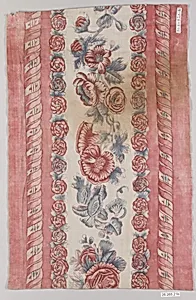
This exquisite painted cotton textile, simply titled *Piece*, dates to the 19th and hails from either British or Indian origins, reflecting the vibrant cultural exchanges of the British colonial era. Comprising two fragments—a larger panel measuring 26½ × 22¼ inches (67.3 × 56.5 cm) and a smaller one at 16¼ × 10 inches (41.3 × 25.4 cm)—it features delicate motifs of flowers and leaves, in a lively, naturalistic style typical of painted textiles. Now housed in the Metropolitan Museum Art's Department of European Sculpture and Decorative Arts, it was generously gifted by William Sloane Coffin in 1926. The medium of painted cotton underscores its significance in textile history, where artists applied pigments directly to fabric for both utilitarian and ornamental purposes. In the 19th century, such pieces were prized for home furnishings like curtains or bedcovers, blending Eastern floral exuberance with Western decorative tastes amid booming Anglo-Indian trade. Whether crafted in Britain as an homage to imported Indian chintz or produced in India for export markets, this artwork exemplifies the fusion of techniques like resist-dyeing or freehand painting, which allowed for intricate, colorfast designs. As a snapshot of 19th-century global artistry, *Piece* invites visitors to appreciate how everyday fabrics carried stories of commerce, craftsmanship, and cross-cultural inspiration, making it a gem in the Met's vast decorative arts collection.