
Piece
Unknown Artist
ca. 1785
Medium
Cotton
Dimensions
L. 34 x W. 41 inches 86.4 x 104.1 cm
Classification
Textiles-Printed
Culture
French
Department
European Sculpture and Decorative Arts
Museum
Metropolitan Museum of Art, New York, NY
Credit
Gift of William Sloane Coffin, 1926
Accession Number
26.265.22
Rights
Public Domain
Tags
Art Historical Context
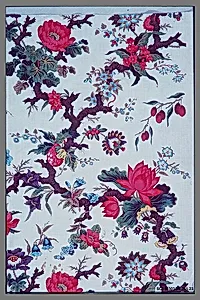
This charming printed cotton textile, simply titled *Piece*, dates to around 1785 and hails from France, a period when the country was a powerhouse of innovative textile production. Measuring 34 by 41 inches, it features delicate motifs of flowers and leaves, in the vibrant yet refined style typical of French printed cottons. These fabrics were created using copperplate printing techniques, which allowed for intricate, multi-color designs that mimicked expensive hand-painted silks but at a more accessible price. Displayed in the Metropolitan Museum of Art's European Sculpture and Decorative Arts department—thanks to a 1926 gift from William Sloane Coffin—this piece exemplifies the artistry of anonymous workshops that fueled France's textile industry. In the late 18th century, just before the French Revolution, printed cottons like this one transformed interiors and fashion across Europe. Often used for upholstery, curtains, or garments, they brought botanical elegance into bourgeois homes, reflecting the era's fascination with nature amid Enlightenment ideals. Floral patterns symbolized abundance and the pastoral idyll, making everyday luxury possible through mechanized printing innovations pioneered in places like Jouy-en-Josas. Though the artist remains unknown, the work's preservation highlights the cultural value of these textiles as both functional art and historical artifacts, offering a glimpse into pre-revolutionary French domestic life.