
Piece
Unknown Artist
ca. 1805
Medium
Cotton
Dimensions
L. 20 x W. 27 inches 50.8 x 68.6 cm
Classification
Textiles-Printed
Culture
British
Department
European Sculpture and Decorative Arts
Museum
Metropolitan Museum of Art, New York, NY
Credit
Gift of William Sloane Coffin, 1926
Accession Number
26.265.31
Rights
Public Domain
Tags
Art Historical Context
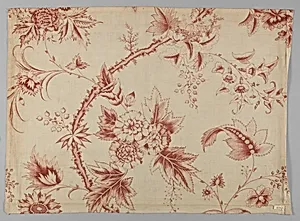
This charming printed cotton textile fragment, titled simply *Piece*, dates to around 1805 and hails from Britain during the early years of the Industrial Revolution. 20 by 27 inches, it the era's booming textile industry, where cotton fabrics became affordable luxuries for homes and wardrobes alike. Adorned with floral motifs—a hallmark of British decorative tastes—the piece likely served as a furnishing sample, curtain panel, or dress fabric, reflecting the Regency period's love for nature-inspired elegance amid rapid urbanization. Printed textiles like this were revolutionary, employing techniques such as woodblock or early copperplate printing to create intricate, repeatable patterns on calico cotton. Britain's mastery of these methods, fueled by innovations in dyeing and machinery, made floral designs ubiquitous in exports worldwide, influencing global fashion and interiors. Donated to The Metropolitan Museum of Art in 1926 by William Sloane Coffin, this artifact preserves a slice of everyday artistry from a transformative time. Though the artist remains unknown, the piece's vivid blooms capture the cultural optimism of early 19th-century Britain, blending utility with beauty in the decorative arts tradition.