
Piece
Unknown Artist
1775–85
Medium
Cotton
Dimensions
L. 40 x W. 23 inches 101.6 x 58.4 cm
Classification
Textiles-Printed
Culture
French
Department
European Sculpture and Decorative Arts
Museum
Metropolitan Museum of Art, New York, NY
Credit
Gift of William Sloane Coffin, 1926
Accession Number
26.265.79
Rights
Public Domain
Tags
Art Historical Context
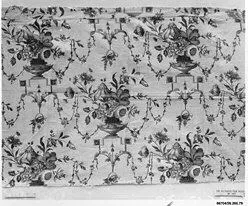
This charming *Piece* is a printed cotton textile from late 18th-century France created between 1775 and 1785. Measuring 40 by 23 inches, it exemplifies the exquisite decorative arts of the period, now housed in the Metropolitan Museum of's European Sculpture and Decor Arts department. Donated in 1926 by William Sloane Coffin, this-patterned fabric—classified as a printed textile—likely served as a panel for upholstery, clothing, or curtains, showcasing the era's fascination with nature-inspired motifs. In the opulent world of pre-Revolutionary France, printed cottons like this one represented a pinnacle of textile innovation. French manufacturers, inspired by imported Indian chintz, perfected copperplate printing techniques around the 1760s, enabling vibrant, detailed designs on cotton that were more affordable than silk or velvet. Floral patterns, as seen here, evoked the Rococo style's lingering love for gardens and abundance, bridging the transition to Neoclassicism. Though the artist remains unknown, this piece highlights France's cultural dominance in luxury goods, where textiles were status symbols blending artistry and industry. Visitors can appreciate how such fabrics adorned aristocratic homes, whispering of a refined world on the cusp of change.