
Piece
Unknown Artist
ca. 1730
Medium
Silk
Dimensions
156 x 23 1/2 inches (396.2 x 59.7 cm)
Classification
Textiles-Velvets
Culture
Italian
Department
European Sculpture and Decorative Arts
Museum
Metropolitan Museum of Art, New York, NY
Credit
Gift of Mrs. Van Santvoord Merle-Smith, 1933
Accession Number
33.39.36
Rights
Public Domain
Tags
Art Historical Context
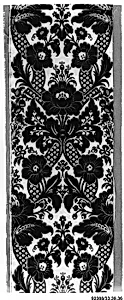
This exquisite silk velvet panel, titled *Piece*, hails from Italy around 1730, a golden era for European textile artistry during the transition from Baroque opulence to Rococo elegance. Measuring an impressive 156 by 23½ inches, its tall, narrow format suggests it was designed for luxurious interiors—perhaps as a wall hanging, bed curtain, or ecclesiastical vestment. Adorned with intricate motifs of flowers and leaves, exemplifies the natural exuberance favored in 18th-century decorative arts, where botanical designs symbolized abundance and the beauty of the natural world. Crafted from sumptuous silk velvet, this textile showcases the mastery of Italian weavers, particularly those from renowned centers like Genoa or Venice. Velvet production involved a complex cut-pile technique, where loops of silk were sheared to create a plush, light-reflecting surface that shimmered in candlelit palaces. Such velvets were prized for their tactile richness and durability, often reserved for the elite to drape thrones, altars, or ball gowns. Today, this anonymous masterpiece resides in the Metropolitan Museum of Art's Department of European Sculpture and Decorative Arts, a generous gift from Mrs. Van Santvoord Merle-Smith in 1933. It invites us to appreciate the unsung labor behind Italy's textile legacy, a testament to craftsmanship that turned silk threads into symbols of prestige and beauty.