
Piece
Unknown Artist
1780–90
Medium
Silk and metal thread
Dimensions
L. 31 1/4 x W. 16 inches 79.4 x 40.6 cm
Classification
Textiles-Woven
Culture
French
Department
European Sculpture and Decorative Arts
Museum
Metropolitan Museum of Art, New York, NY
Credit
Gift of The United Piece Dye Works, 1936
Accession Number
36.90.200
Rights
Public Domain
Tags
Art Historical Context
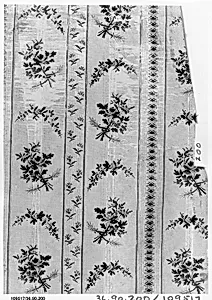
This exquisite textile fragment, simply titled *Piece*, hails from late 18th-century France (1780–90) and showcases the opulent craftsmanship of the era. Woven from luxurious silk and shimmering metal threads, it measures 31¼ x 16 inches and features delicate motifs of flowers and leaves—a hallmark of French decorative arts during the waning years of the Ancien Régime. Produced in the renowned weaving centers like Lyon, such pieces were prized for their intricate patterns, often adorning gowns, furnishings, or wall hangings in aristocratic homes. The use of metal threads, likely gold or silver lamé, added a regal luster, elevating the textile beyond mere fabric to a work of wearable art. This woven technique, known as *brocatelle* or similar Jacquard precursors, demanded skilled looms and weavers, reflecting France's dominance in silk production amid Enlightenment-era luxury trade. Though the artist remains unknown, the piece embodies the floral exuberance bridging Rococo elegance and emerging Neoclassicism. A generous gift to the Metropolitan Museum of Art from The United Piece Dye Works in 1936, this survivor offers a tactile glimpse into pre-Revolutionary splendor, inviting visitors to imagine its role in lavish salons or royal wardrobes.