
Piece
Unknown Artist
16th–17th century
Medium
Silk and metal thread
Dimensions
L. 15 1/4 x W. 12 inches (38.7 x 30.5 cm)
Classification
Textiles-Velvets
Culture
Italian
Department
European Sculpture and Decorative Arts
Museum
Metropolitan Museum of Art, New York, NY
Credit
Gift of The United Piece Dye Works, 1936
Accession Number
36.90.264
Rights
Public Domain
Art Historical Context
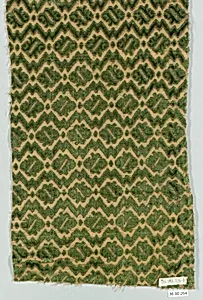
This exquisite velvet fragment, titled simply *Piece*, hails from Italy during the opulent 16th–17th centuries, a golden age for textile arts in Renaissance and early Baroque Europe. Measuring 15¼ x 12 inches (38.7 x 30.5 cm), it is woven from luxurious silk and shimmering metal threads, exemplifying the masterful cut-pile technique of Italian velvet production. These velvets, often produced in renowned centers like Genoa and Venice, were prized for their texture and light-reflecting surfaces, transforming fabric into a canvas of subtle luxury. The use of metal threads—likely gold or silver—added a regal gleam, making such pieces ideal for ecclesiastical vestments, aristocratic garments, or lavish furnishings. In an era when textiles signified wealth and status, this fragment captures Italy's dominance in weaving innovation, where intricate looms created depth and pattern through piled silk loops. Its survival as a standalone "piece" highlights the durability of these high-end materials, preserved now in the Metropolitan Museum of Art's Department of European Sculpture and Decorative Arts. Generously gifted by The United Piece Dye Works in 1936, this artwork invites visitors to appreciate the tactile artistry of the past—run your eyes over its sumptuous surface and imagine it adorning a Renaissance palace or cathedral, whispering tales of craftsmanship and cultural splendor.