
Piece
Unknown Artist
16th–17th century
Medium
Silk
Dimensions
L. 13 x W. 10 inches (33.0 x 25.4 cm)
Classification
Textiles-Velvets
Culture
Italian
Department
European Sculpture and Decorative Arts
Museum
Metropolitan Museum of Art, New York, NY
Credit
Gift of The United Piece Dye Works, 1936
Accession Number
36.90.266
Rights
Public Domain
Art Historical Context
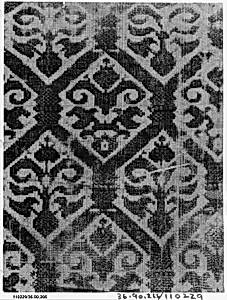
This exquisite silk velvet fragment, originating from Italy during the 16th17th centuries, exemplifies Renaissance mastery of luxury textiles. Measuring a modest 13 x 10 inches, it hails from a golden age when Italian city-states like Genoa and Venice dominated Europe's fabric trade, producing opulent velvets prized by nobility and clergy alike. Donated to the Metropolitan Museum of Art 1936 by The Piece Dye Works, thisPiece" survives as a testament to the era's opulence, where such fabrics adorned grand garments, ecclesiastical vestments, and lavish furnishings. Velvet's allure lies in its intricate weaving technique: silk threads are looped and then cut to create a plush, light-reflecting pile that shifts color with every angle—a hallmark of Italian innovation. These textiles were not mere cloth but symbols of wealth and status, often featuring elaborate patterns dyed with costly pigments. Though the artist remains unknown, the piece reflects the anonymous yet highly skilled labor of workshops that fueled Italy's economy and influenced global fashion. Today, in the Met's Department of European Sculpture and Decorative Arts, it invites us to appreciate the tactile artistry of the past, reminding visitors how everyday luxuries shaped cultural splendor.