
Piece
Unknown Artist
16th–17th century
Medium
Silk
Dimensions
L. 9 1/2 x 9 1/2 inches (24.1 x 24.1 cm)
Classification
Textiles-Velvets
Culture
Italian
Department
European Sculpture and Decorative Arts
Museum
Metropolitan Museum of Art, New York, NY
Credit
Gift of The United Piece Dye Works, 1936
Accession Number
36.90.274
Rights
Public Domain
Art Historical Context
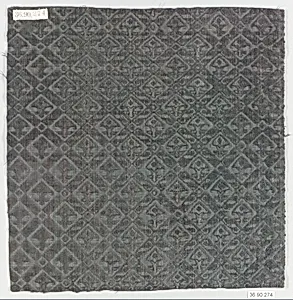
This charming silk velvet fragment, titled *Piece*, originates from 16th–17th century Italy, a golden era for European textile artistry. Measuring a modest 9½ x 9½ inches (24.1 x 24.1 cm), it entered the Metropolitan Museum of Art collection in 1936 as a gift The United Piece Dye Works Housed in the Department of Sculpture and Decorative Arts and classified as Textiles-Velv, it represents a surviving snippet of luxurious fabric production from Renaissance and early Baroque Italy. Italian velvets were the pinnacle of opulence, woven in renowned centers like Genoa, Venice, and Florence using fine silk threads to create a plush pile that caught light dramatically. This technique—cutting loops on a ground weave—produced rich textures ideal for ecclesiastical vestments, noble garments, and lavish furnishings, symbolizing wealth and piety. Silk's sheen amplified vibrant dyes, making these textiles a cornerstone of Italy's export trade and cultural prestige. Though the artist is unknown, this square remnant whispers of masterful craftsmanship that bridged art and daily splendor, inviting us to imagine it adorning a cardinal's cope or a palazzo's cushions. A testament to Italy's textile legacy, it reminds visitors of how fabric once wove itself into the fabric of history.