
Piece
Unknown Artist
16th–17th century
Medium
Silk
Dimensions
L. 10 3/4 x W. 7 inches (27.3 x 17.8 cm)
Classification
Textiles-Velvets
Culture
Italian
Department
European Sculpture and Decorative Arts
Museum
Metropolitan Museum of Art, New York, NY
Credit
Gift of The United Piece Dye Works, 1936
Accession Number
36.90.439
Rights
Public Domain
Art Historical Context
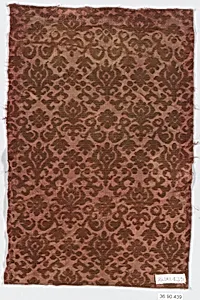
This exquisite silk velvet fragment, originating from Italy in the 16th or 17th century, the pinnacle of Renaissance and early Baroque textile artistry. Measuring just 10¾ x 7 inches, this small "piece" likely served as part of a larger luxury textile—perhaps for ecclesiastical vestments, opulent clothing, or lavish furnishings. Italian workshops, particularly in cities like Venice, Florence, and Genoa, were for their mastery of velvet weaving, a technique that creates a plush, lustrous pile by cutting loops of silk weft yarns against a woven ground. The result is a fabric that catches light dramatically, symbolizing wealth and status in an era when silk was imported expensively from the East and transformed into high-end goods. Velvets like this were cultural treasures, traded across Europe and beyond, reflecting Italy's dominance in the luxury textile trade during the Age of Exploration. Their intricate patterns—often floral, pomegranate, or geometric motifs—demanded skilled labor and showcased innovations in loom technology and dyeing. Though the specific design of this piece remains unrecorded, its survival highlights the fragility and rarity of such textiles, many lost to time or wear. Generously gifted to The Metropolitan Museum of Art in 1936 by The United Piece Dye Works, this artifact invites us to appreciate the anonymous artisans whose craftsmanship endures, bridging the opulence of Italy's golden age with our modern gaze.