
Piece
Unknown Artist
16th century
Medium
Silk on canvas
Dimensions
L. 20 x W. 11 1/2 inches (50.8 x 29.2 cm)
Classification
Textiles-Embroidered
Culture
Spanish or Italian
Department
European Sculpture and Decorative Arts
Museum
Metropolitan Museum of Art, New York, NY
Credit
Gift of The United Piece Dye Works, 1936
Accession Number
36.90.1373
Rights
Public Domain
Art Historical Context
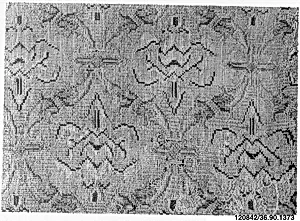
This delicate 16th-century embroidered silk panel, simply titled *Piece*, measures by 11½ inches (50.8 x 29.2 cm) originates from either Spain or Italy. Crafted by unknown artist, it resides in the Metropolitan of Art's Department of European Sculpture and Decor Arts, gifted in 1936 by The United Piece Dye Works. As prime example of Renaissance textiles, it the era's opulence, when embroidery elevated everyday fabrics into treasures for homes, churches, or nobility. The medium—vibrant silk threads worked onto a canvas ground—underscores the technical prowess of period artisans. Silk, often imported via trade routes from Asia, was a status symbol, its luster and durability ideal for intricate stitching that could withstand centuries. This classification as an embroidered textile highlights its role in the decorative arts, blending painting-like detail with the tactile intimacy of needlework, a hallmark of Italian or Spanish workshops during the High Renaissance. Though its precise motifs remain a mystery, the piece evokes the cultural splendor of 16th-century Europe, where textiles wove together artistry, commerce, and piety. Visitors can appreciate how such fragments preserve the anonymous genius of craftspeople, offering a tactile glimpse into a world of lavish refinement.