
Piece
Unknown Artist
ca. 1730
Medium
Silk
Dimensions
98 in. × 22 1/4 in. (248.9 × 56.5 cm) (loom width)
Classification
Textiles-Woven
Culture
Italian
Department
European Sculpture and Decorative Arts
Museum
Metropolitan Museum of Art, New York, NY
Credit
Gift of Mrs. Edward S. Harkness, 1941
Accession Number
41.90.38
Rights
Public Domain
Tags
Art Historical Context
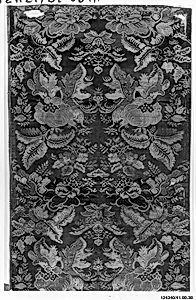
This exquisite silk textile panel, dating to around 1730 and attributed to an unknown Italian artist, exemplifies the opulence of 18th European decorative arts. Woven in a narrow loom width of 22¼ inches (56.5 cm) and stretching an impressive 98 inches (.9 cm) in length, it was likely produced for luxurious furnishings, garments, or ecclesiastical vestments. Now housed in the Metropolitan Museum of Art's of European Sculpture and Decor Arts—thanks to a generous 1941 gift from Mrs. Edward S. Harkness—it showcases Italy's renowned silk-weaving tradition, centered in regions like Lombardy and Venice. The fabric bursts with intricate motifs of flowers and leaves, rendered in vibrant silks that capture the Rococo era's delight in nature's abundance. Woven techniques allowed for rich color saturation and fine detail, with threads interlacing to create depth and texture without additional embroidery. This method highlights the technical mastery of Italian looms, where silk's luster and durability made it a status symbol for the elite. In historical context, such pieces reflect Italy's pivotal role in the luxury textile trade during the early 18th century, bridging Baroque grandeur and emerging Rococo elegance. Visitors will appreciate how this fragile survivor evokes the sensory splendor of grand palazzos, inviting us to imagine its original vibrant life.