
Piece
Unknown Artist
ca. 1500
Medium
Silk and metal thread
Dimensions
L. 30 3/4 x W. 7 inches (78.1 x 17.8 cm)
Classification
Textiles-Woven
Culture
Italian, Florence
Department
European Sculpture and Decorative Arts
Museum
Metropolitan Museum of Art, New York, NY
Credit
Fletcher Fund, 1946
Accession Number
46.156.100
Rights
Public Domain
Tags
Art Historical Context
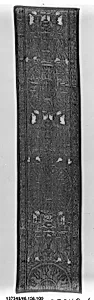
This exquisite textile fragment, simply titled *Piece*, hails from Florence, Italy, around 1500, during the dazzling height of the Renaissance. Woven from luxurious silk and shimmering metal threads, it measures 30¾ x 7 inches and showcases the city's renowned mastery of opulent fabrics. Produced by an unknown artist within Florence's thriving weaving guilds, such pieces were prized for their intricate designs featuring human figures, likely processions or narrative scenes that brought stories to life in sumptuous color and texture. Renaissance Florence—a hub of artistic innovation under patrons like the Medici—textiles like this were more than mere decoration. They adorned altarpieces, vestments, and elite furnishings, symbolizing wealth and piety. The use of metal threads, often gold or silver, created a luminous effect that mimicked jewelry or divine light, elevating woven works to the status of high art. This *Piece* exemplifies the technical virtuosity of Florentine looms, where weavers blended fine silk warps with complex brocading techniques for depth and realism. Today, housed in the Metropolitan Museum of Art's European Sculpture and Decorative Arts Department (acquired via the Fletcher Fund in 1946), it offers a tactile glimpse into Renaissance craftsmanship. Though a fragment, its preserved elegance invites us to imagine the grandeur of the whole, reminding visitors of textiles' enduring role in cultural storytelling.