
Piece
Unknown Artist
1695–1705
Medium
Silk
Dimensions
9 ft. 6 in. × 22 in. (loom width) (289.6 × 55.9 cm)
Classification
Textiles-Woven
Culture
Italian
Department
European Sculpture and Decorative Arts
Museum
Metropolitan Museum of Art, New York, NY
Credit
Museum Accession
Accession Number
X.401
Rights
Public Domain
Tags
Art Historical Context
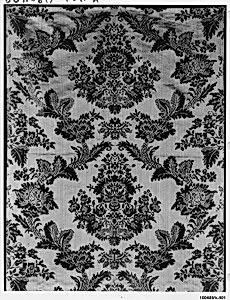
This exquisite silk textile fragment, woven in Italy between 1695 and 1705, exemplifies opulence of late Baroque decorative arts. Produced during a golden age of European luxury goods, it reflects Italy's renowned silk industry, centered in cities like Florence and Venice where skilled weavers crafted sumptuous fabrics for elite interiors, ecclesiastical garments, and high fashion. The piece measures an impressive 9 feet 6 inches by 22 inches—precisely the standard loom width—suggesting it was part of a larger bolt intended for curtains, upholstery, or vestments. Crafted from lustrous silk, the textile showcases intricate woven floral motifs, a hallmark of the period's exuberant naturalism. Weavers employed complex Jacquard-like techniques (pre-dating the machine) to create raised patterns and shimmering effects through brocading or velvet pile, capturing the era's fascination with abundance and nature's bounty. These floral designs symbolized prosperity and were prized by nobility, adorning palaces from Versailles to the Vatican. Today, housed in the Metropolitan Museum of Art's European Sculpture and Decorative Arts Department, this anonymous masterpiece offers a tactile glimpse into 18th-century Italian craftsmanship, highlighting how textiles were once as celebrated as paintings in the decorative canon.