
Piece
Unknown Artist
18th century
Medium
Cotton
Dimensions
Overall (a): 37 1/4 x 14 1/4 in. (94.6 x 36.2 cm) Overall (b): 36 1/2 x 9 1/4 in. (92.7 x 23.5 cm) Overall (c): 37 1/4 x 13 1/2 in. (94.6 x 34.3 cm)
Classification
Textiles-Painted and Printed
Culture & Period
Japan · Edo period (1615–1868)
Department
Asian Art
Museum
Metropolitan Museum of Art, New York, NY
Credit
Edward C. Moore Collection, Bequest of Edward C. Moore, 1891
Accession Number
91.1.37a–c
Rights
Public Domain
Tags
Art Historical Context
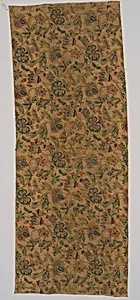
This delicate cotton textile, simply titled *Piece*, originates from 18th-century Japan during the Edo period (1615–1868), a time of relative peace and cultural flourishing. Composed of three panels—measuring approximately 37 x 14 inches, 36½ x 9¼ inches, and 37¼ x 13½ inches—it belongs to the Metropolitan Museum of Art's Asian Art collection, gifted through the Edward C. Moore Collection in 1891. As a painted and printed textile, it reflects the era's mastery of fabric arts, often used for garments, hangings, or screens. The use of cotton as a medium was practical yet elevated by sophisticated techniques like stencil printing (katazome) or hand-painting, which allowed for vibrant, detailed motifs. The tag "Leaves" suggests nature-inspired designs, evoking Japan's profound reverence for seasonal foliage—symbols of transience and beauty in Edo aesthetics. Such textiles were everyday luxuries, adorning kimonos or shop curtains (noren), blending utility with artistic expression. Though by an unknown artist, this work highlights the anonymous craftsmanship that defined Edo textile production, where workshops innovated dyeing and printing to meet growing urban demand. A quiet testament to Japan's textile heritage, it invites visitors to appreciate the subtle elegance of impermanence woven into fabric.