
Piece
Unknown Artist
18th century
Medium
Silk, metallic thread
Dimensions
7 1/4 x 4 in. (18.41 x 10.16 cm)
Classification
Textiles-Woven
Culture & Period
Japan · Edo period (1615–1868)
Department
Asian Art
Museum
Metropolitan Museum of Art, New York, NY
Credit
Gift of Mr. and Mrs. H. O. Havemeyer, 1896
Accession Number
96.14.55
Rights
Public Domain
Tags
Art Historical Context
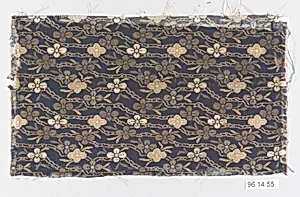
This exquisite fragment, titled simply *Piece*, hails from 18th-century Japan during the Edo period (161–1868), a time of relative peace and prosperity that fostered remarkable advancements in textile arts. Woven from fine silk and shimmering metallic threads, it measures just 7¼ x 4 inches, likely a remnant of a larger garment like a kimono obi sash. The floral motifs, a hallmark of Japanese design, evoke the transient beauty of nature, reflecting seasonal changes and the cultural reverence for impermanence as *mono no aware*. Crafted through intricate weaving techniques, the use of metallic threads—often gold or silver lamé—added luster and luxury, signifying status among the growing merchant class. Edo-era textiles like this blended functionality with artistry, showcasing weavers' mastery in creating patterns directly in the loom without dyes, a labor-intensive process that could take months. Flowers, such as stylized chrysanthemums or cherry blossoms, symbolized harmony and elegance in daily life and festivals. Generously gifted to the Metropolitan Museum of Art in 1896 by Mr. and Mrs. H. O. Havemeyer, renowned collectors, this piece offers a window into Japan's opulent textile heritage. Though small, it captures the era's vibrant creativity, inviting visitors to appreciate the delicate interplay of light, texture, and tradition.