
Piece
Unknown Artist
18th century
Medium
Silk
Dimensions
6 3/4 x 6 3/4 in. (17.15 x 17.15 cm)
Classification
Textiles-Woven
Culture & Period
Japan · Edo period (1615–1868)
Department
Asian Art
Museum
Metropolitan Museum of Art, New York, NY
Credit
Gift of Mr. and Mrs. H. O. Havemeyer, 1896
Accession Number
96.14.66
Rights
Public Domain
Tags
Art Historical Context
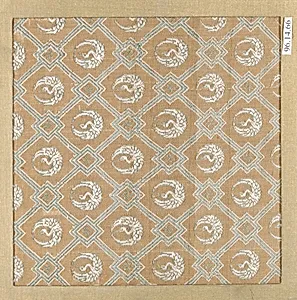
This exquisite silk textile fragment, titled *Piece*, hails from Japan's Edo period (1615–1868), a time of relative peace and cultural flourishing under the Tokugawa shogunate. Measuring a modest 6 3/4 x 6 3/4 inches, it exemplifies the refined artistry of 18th-century Japanese weaving. Produced by an unknown artist, the small square likely served as a sample or part of a larger garment, pouch, or decorative item, showcasing the era's mastery of silk production—a luxury material central to Japan's economy and export trade. Woven with meticulous precision, the textile falls within the Metropolitan Museum of Art's Asian Art collection, gifted by collectors Mr. and Mrs. H. O. Havemeyer in 1896. Its bird motifs, common in Edo-period designs, evoke nature's grace and seasonal beauty, symbols often tied to poetry, folklore, and the ukiyo-e ("floating world") aesthetic celebrating everyday elegance. Silk weaving techniques during this period involved complex looms and dyes derived from plants and insects, allowing for vibrant patterns that reflected social status and artistic innovation. As a window into Edo Japan's textile heritage, this piece highlights how everyday crafts became high art, blending functionality with poetic imagery. Visitors can appreciate its delicate scale up close, a testament to the anonymous makers who elevated silk into enduring cultural treasures.