
Piece
Unknown Artist
18th–19th century
Medium
Silk
Dimensions
9 x 6 1/4 in. (22.86 x 15.88 cm)
Classification
Textiles-Woven
Culture & Period
Japan · Edo period (1615–1868)
Department
Asian Art
Museum
Metropolitan Museum of Art, New York, NY
Credit
Gift of Mr. and Mrs. H. O. Havemeyer, 1896
Accession Number
96.14.75
Rights
Public Domain
Art Historical Context
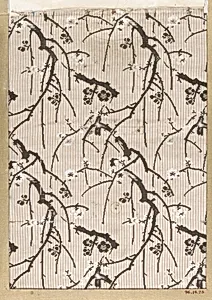
This delicate silk textile fragment, simply titled *Piece*, hails from Japan's Edo period1615–1868), a time of relative peace and cultural flourishing under the Tokugawa shogunate. Measuring just 9 x 6¼ inches (22.86 x 15.88 cm), it exemplifies the exquisite woven craftsmanship of anonymous artisans who elevated textiles into high art. Woven silk was a prized medium in Japan, symbolizing luxury and technical mastery; silk production thrived in regions like Nishijin, where intricate looms produced fabrics for kimonos, obi sashes, and ceremonial garments. During the 18th–19th centuries, Edo textiles reflected societal values through subtle motifs—often nature-inspired patterns adhering to sumptuary laws that regulated opulence. This piece, though small, likely served as a sample or remnant, showcasing the period's innovative weaving techniques that intertwined warp and weft for durability and sheen. Its survival highlights the enduring appeal of Japanese textile arts, blending utility with aesthetic refinement. Generously gifted to The Metropolitan Museum of Art in 1896 by Mr. and Mrs. H. O. Havemeyer, prominent collectors of Asian treasures, this fragment invites us to marvel at the unsung skill of Edo weavers. Pause to appreciate its tactile elegance—a window into a world where silk whispered stories of tradition and ingenuity.