
Piece
Unknown Artist
18th–19th century
Medium
Silk
Dimensions
10 1/4 x 5 1/4 in. (26.04 x 13.34 cm)
Classification
Textiles-Woven
Culture & Period
Japan · Edo period (1615–1868)
Department
Asian Art
Museum
Metropolitan Museum of Art, New York, NY
Credit
Gift of Mr. and Mrs. H. O. Havemeyer, 1896
Accession Number
96.14.83
Rights
Public Domain
Tags
Art Historical Context
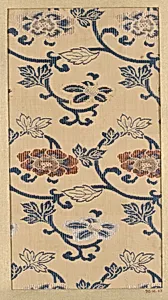
This exquisite silk textile fragment, simply titled *Piece*, hails from Japan's Edo period (16151868), a golden age of artistic refinement and urban prosperity. Woven in the 18th or 19th century, modest dimensions—10¼ × 5¼ inches—suggest it may be a remnant from a larger garment, accessory, or decorative panel, showcasing the meticulous craftsmanship of anonymous artisans. The design, featuring delicate leaf motifs, reflects Japan's deep reverence for nature, where leaves often symbolized the fleeting beauty of seasons and the Buddhist concept of impermanence (mono no aware). Edo-era textiles like this one highlight advanced weaving techniques, such as jacquard-like patterning on lustrous silk, which allowed for intricate, pictorial designs without dyeing after weaving. Silk production flourished during this isolated yet culturally vibrant time, with guilds in Kyoto and Nishijin perfecting methods for kimono fabrics and furnishings prized by samurai and merchants alike. A generous gift to The Metropolitan Museum of Art from Mr. and Mrs. H. O. Havemeyer in 1896, this piece offers a tangible glimpse into everyday luxury and the enduring elegance of Japanese textile arts, inviting us to appreciate the subtlety of woven storytelling.