
Piece
Unknown Artist
18th–19th century
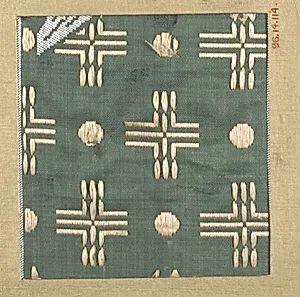
Medium
Silk
Dimensions
4 1/4 x 4 1/4 in. (10.80 x 10.80 cm)
Classification
Textiles-Woven
Culture & Period
Japan · Edo period (1615–1868)
Department
Asian Art
Museum
Metropolitan Museum of Art, New York, NY
Credit
Gift of Mr. and Mrs. H. O. Havemeyer, 1896
Accession Number
96.14.114
Rights
Public Domain
Art Historical Context
This delicate silk textile fragment, titled simply *Piece*, hails from Japan's Edo period (16151868), a time of relative peace and cultural flourishing under the Tokugawa shogunate. Measuring just 4¼ x 4¼ inches (10.8 x 10.8 cm), it exemplifies the exquisite craftsmanship of woven Asian textiles, where silk—prized for its luster and durability—was meticulously loomed into fabrics for kimonos, obi sashes, and decorative screens. Woven techniques during this era often involved intricate patterns reflecting nature, seasons, or daily life, showcasing the weavers' mastery of tension, dye integration, and fine threads. In Edo-period Japan, textiles were more than utilitarian; they symbolized status, artistry, and regional pride, with urban centers like Kyoto and Nishijin as hubs of silk production. This small *Piece* likely represents a surviving snippet from a larger garment or furnishing, highlighting the era's innovation in luxury goods amid a booming merchant class. Donated to the Metropolitan Museum of Art in 1896 by collectors Mr. and Mrs. H. O. Havemeyer, it joins their renowned Asian art gifts, offering visitors a tangible link to Japan's textile heritage and the refined aesthetics of the time.