
Piece
Unknown Artist
18th–19th century
Medium
Silk
Dimensions
6 1/4 in. × 4 in. (15.9 × 10.2 cm)
Classification
Textiles-Tapestries
Culture & Period
Japan · Edo (1615–1868)
Department
Asian Art
Museum
Metropolitan Museum of Art, New York, NY
Credit
Gift of Mr. and Mrs. H. O. Havemeyer, 1896
Accession Number
96.14.167
Rights
Public Domain
Tags
Art Historical Context
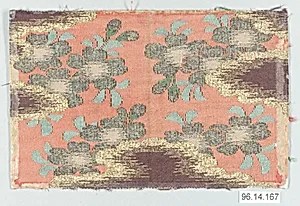
This exquisite silk tapestry fragment, simply titled *Piece*, hails from Japan's Edo period (1615–1868), a time of relative peace and cultural flourishing under the Tokugawa shogunate. Measuring just 6¼ × 4 inches, it captures the refined artistry of 18th–19th-century Japanese textiles, likely part of a larger garment, screen, or decorative hanging. Floral motifs, as suggested by its tags, were immensely popular, symbolizing the transient beauty of nature—a core theme in Japanese aesthetics, evoking seasonal ephemerality and harmony with the environment. Crafted in silk, a luxurious medium prized for its luster and durability, this work exemplifies the masterful weaving and dyeing techniques of Edo-era artisans. Tapestries like this often employed intricate methods such as ikat (resist-dyeing threads before weaving) or embroidery, creating vibrant, layered patterns that adorned the elite. Textiles were not mere crafts but cultural treasures, reflecting social status and the period's booming merchant class, who commissioned opulent designs amid urban prosperity in cities like Edo (modern Tokyo). A generous gift to the Metropolitan Museum of Art in 1896 from Mr. and Mrs. H.O. Havemeyer, this piece offers a tangible glimpse into Japan's textile heritage. Though small, it whispers of grander narratives, inviting visitors to appreciate the precision and poetry woven into everyday elegance.