
Piece
Unknown Artist
18th–19th century
Medium
Silk
Dimensions
5 3/4 x 5 1/4 in. (14.61 x 13.34 cm)
Classification
Textiles-Woven
Culture & Period
Japan · Edo (1615–1868)
Department
Asian Art
Museum
Metropolitan Museum of Art, New York, NY
Credit
Gift of Mr. and Mrs. H. O. Havemeyer, 1896
Accession Number
96.14.213
Rights
Public Domain
Tags
Art Historical Context
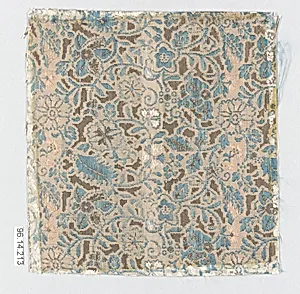
This delicate silk textile fragment, simply titled *Piece*, hails from Japan's Edo period (1615–1868), a time of remarkable artistic and economic flourishing under the Tokugawa shogunate. Woven in the 18th or 19th century, its modest dimensions of 5¾ x 5¼ inches make it a intimate example of Japan's mastery in textile arts. The motif of leaves, suggested by its tags, evokes the natural world so central to Japanese aesthetics, symbolizing seasonal change and the ephemeral beauty of life—a core theme in Edo-era culture. Crafted from fine silk, this woven piece showcases the sophisticated techniques of Japanese weavers, who achieved intricate patterns through complex looms and dyed threads. Silk production thrived in Edo Japan, with regions like Nishijin in Kyoto renowned for such luxurious fabrics used in kimonos, furnishings, and ceremonial objects. Though the artist remains unknown, the work reflects the period's emphasis on refined craftsmanship over individual fame, prioritizing harmony and subtlety. Now housed in the Metropolitan Museum of Art's Asian Art Department, this treasure was a gift from Mr. and Mrs. H. O. Havemeyer in 1896, early collectors who brought Japanese wonders to Western audiences. Visitors can marvel at how such a small object captures the elegance and cultural depth of Edo Japan.