
Piece
Unknown Artist
18th–19th century
Medium
Silk
Dimensions
9 1/2 x 10 1/2 in. (24.13 x 26.67 cm)
Classification
Textiles-Woven
Culture & Period
Japan · Edo (1615–1868)
Department
Asian Art
Museum
Metropolitan Museum of Art, New York, NY
Credit
Gift of Mr. and Mrs. H. O. Havemeyer, 1896
Accession Number
96.14.273
Rights
Public Domain
Art Historical Context
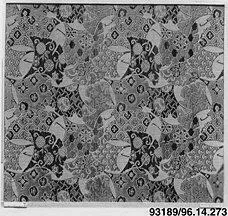
This exquisite silk textile fragment, titled *Piece*, hails from Japan's Edo period (16151868), a time of remarkable stability and cultural flourishing under the Tokugawa shogunate. Measuring a modest 9½ x 10½ inches, it the refined craftsmanship of woven textiles that were integral to daily life, fashion, and social status. Produced between the 18th and 19th centuries by an unknown artist, the piece reflects the era's mastery of silk weaving, a labor-intensive art form that transformed raw threads into luxurious fabrics for kimonos, obi sashes, and ceremonial garments. Silk held profound cultural significance in Edo Japan, symbolizing wealth and refinement amid the period's booming economy and urbanization. Weavers employed intricate techniques like plain weave or supplementary patterning to create vibrant, durable textiles, often dyed with natural pigments from plants and minerals. Though details of its specific design remain elusive, such fragments offer a window into the artisanal guilds that sustained Japan's textile trade, influencing everything from merchant class attire to ukiyo-e prints celebrating fashion. Generously gifted to the Metropolitan Museum of Art in 1896 by Mr. and Mrs. H. O. Havemeyer, this delicate survivor invites us to appreciate the unsung heroes of Edo artistry—those skilled hands that wove beauty into the fabric of history.