
Piece
Unknown Artist
18th–19th century
Medium
Silk
Dimensions
4 3/4 x 2 1/4 in. (12.07 x 5.71 cm)
Classification
Textiles-Woven
Culture & Period
Japan · Edo (1615–1868)
Department
Asian Art
Museum
Metropolitan Museum of Art, New York, NY
Credit
Gift of Mr. and Mrs. H. O. Havemeyer, 1896
Accession Number
96.14.304
Rights
Public Domain
Art Historical Context
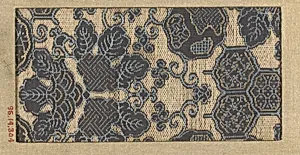
This exquisite silk textile fragment, simply titled *Piece*, hails from Japan's Edo period (16151868), a time of relative peace and cultural flourishing under the Tokugawa shogunate. Measuring just 4 3/4 x 2 1/4 inches, its diminutive size suggests it may have been a sample, patch, or component of a larger garment like a kimono or pouch. Produced by an unknown artisan in the 18th–19th century, it exemplifies the meticulous craftsmanship of Japanese weavers during an era when silk production became a hallmark of national pride and economic vitality. Woven from fine silk, the piece showcases advanced textile techniques perfected in Edo-era workshops, where looms produced intricate patterns through methods like tabby or twill weaves. Silk, prized for its luster and durability, was not only a luxury material but also a canvas for artistic expression, often featuring motifs inspired by nature, seasons, or daily life—though specifics here remain tantalizingly elusive. These textiles were integral to Japanese fashion and social customs, reflecting status and aesthetic refinement. Generously donated to the Metropolitan Museum of Art in 1896 by collectors Mr. and Mrs. H. O. Havemeyer, this fragment offers visitors a intimate glimpse into Japan's textile legacy, inviting us to appreciate the anonymous genius behind everyday artistry.