
Piece
Unknown Artist
18th–19th century
Medium
Silk
Dimensions
12 x 9 3/4 in. (30.48 x 24.77 cm)
Classification
Textiles-Woven
Culture & Period
Japan · Edo (1615–1868)
Department
Asian Art
Museum
Metropolitan Museum of Art, New York, NY
Credit
Gift of Mr. and Mrs. H. O. Havemeyer, 1896
Accession Number
96.14.348
Rights
Public Domain
Art Historical Context
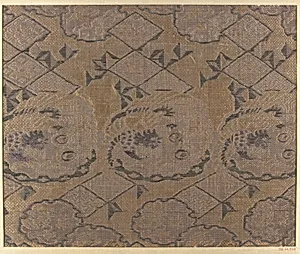
This exquisite silk textile fragment, woven in Japan during the Edo period (1615–1868), offers a glimpse into the refined craftsmanship of 18th- to 19th-century Asian art. Measuring a modest 12 x 9¾ inches, this "Piece" exemplifies the era's mastery of woven silks, prized for their luxurious sheen, durability, and intricate patterns. Edo Japan, under the stable Tokugawa shogunate, saw textiles flourish as both everyday luxuries and status symbols, adorning kimonos, obi sashes, and furnishings for samurai, merchants, and commoners alike. Woven silk techniques during this time involved sophisticated looms capable of creating complex motifs through weft or warp patterning, often dyed with natural pigments for vibrant, enduring colors. Silk production was a cornerstone of Japan's economy, with regions like Nishijin in Kyoto renowned for their innovations. Though the artist remains unknown, such pieces highlight the anonymous yet highly skilled labor of textile workshops, where precision and beauty intertwined. Generously gifted to the Metropolitan Museum of Art in 1896 by Mr. and Mrs. H. O. Havemeyer, avid collectors of global treasures, this fragment preserves Edo Japan's cultural legacy. Today, it invites visitors to appreciate the tactile artistry of a bygone age, where every thread told a story of tradition and ingenuity.