
Piece
Unknown Artist
18th century
Medium
Silk, metallic thread
Dimensions
9 in. × 6 5/8 in. (22.9 × 16.8 cm)
Classification
Textiles-Woven
Culture & Period
Japan · Edo period (1615–1868)
Department
Asian Art
Museum
Metropolitan Museum of Art, New York, NY
Credit
Gift of Mr. and Mrs. H. O. Havemeyer, 1896
Accession Number
96.14.363
Rights
Public Domain
Tags
Art Historical Context
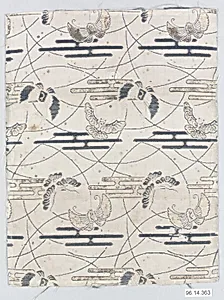
This exquisite woven textile fragment, titled simply *Piece*, hails from 18th-century Japan during Edo period (16151868), a time of relative peace and cultural flourishing under the Tokugawa shogunate. Crafted from fine silk and shimmering metallic threads, it measures just 9 × 6⅝ inches (22.9 × 16.8 cm), suggesting it may have been part of a larger garment, accessory, or decorative panel. Adorned with delicate butterflies—a motif symbolizing transformation, joy, and the fleeting beauty of life in Japanese art—it exemplifies the period's mastery of intricate patterns in everyday and ceremonial objects. In Edo Japan, textiles like this were prized for their technical sophistication and aesthetic refinement, often produced in workshops specializing in *kasuri* or brocade weaves. The use of metallic threads, likely gold or silver lame, added a luxurious glow, catching light to mimic the iridescence of butterfly wings and elevate the humble silk base. Such pieces reflect the era's vibrant merchant culture, where fashion and craftsmanship thrived amid urbanization and kabuki theater influences. A generous gift to the Metropolitan Museum of Art from Mr. and Mrs. H. O. Havemeyer in 1896, this anonymous work invites us to appreciate the anonymous artisans whose skill turned silk into poetry, preserving a slice of Japan's textile heritage for modern eyes.