
Piece
Unknown Artist
18th–19th century
Medium
Silk
Dimensions
5 3/4 x 6 3/4 in. (14.61 x 17.15 cm)
Classification
Textiles-Woven
Culture & Period
Japan · Edo (1615–1868)
Department
Asian Art
Museum
Metropolitan Museum of Art, New York, NY
Credit
Gift of Mr. and Mrs. H. O. Havemeyer, 1896
Accession Number
96.14.391
Rights
Public Domain
Tags
Art Historical Context
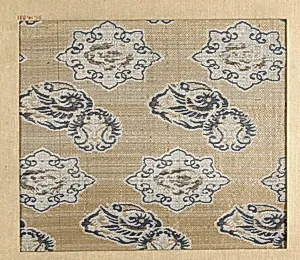
This exquisite silk textile fragment, titled simply *Piece*, hails from Japan's Edo period (1615–1868), a time of relative peace and cultural flourishing under the Tokugawa shogunate. Measuring just 5¾ x 6¾ inches, this small woven artwork exemplifies the meticulous craftsmanship of Japanese silk production, centered in regions like Kyoto and Nishijin. Donated to the Metropolitan Museum of Art 1896 by Mr. and Mrs. H. O. Havemeyer, it entered one of the earliest Western collections of Asian art, highlighting growing global appreciation for Japan's refined aesthetics. Woven from fine silk threads, the piece likely features birds—a recurring motif in Edo-era textiles symbolizing grace, seasonal change, and harmony with nature. Weavers employed sophisticated techniques like jacquard-like patterning or supplementary weft to create intricate designs, often for kimonos, obi sashes, or ceremonial garments. Silk's luster and durability made it a luxury material, reflecting the era's vibrant merchant class and ukiyo-e-inspired decorative arts. Though the artist remains unknown, this fragment captures the poetic elegance of Edo textile traditions, blending functionality with artistry. Visitors can marvel at how such a modest object embodies Japan's enduring mastery of natural motifs and technical innovation.