
Piece
Unknown Artist
18th–19th century
Medium
Silk
Dimensions
7 x 5 in. (17.78 x 12.70 cm)
Classification
Textiles-Woven
Culture & Period
Japan · Edo (1615–1868)
Department
Asian Art
Museum
Metropolitan Museum of Art, New York, NY
Credit
Gift of Mr. and Mrs. H. O. Havemeyer, 1896
Accession Number
96.14.465
Rights
Public Domain
Art Historical Context
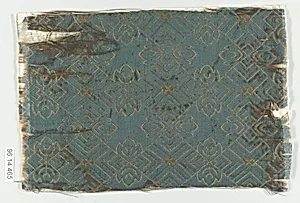
This exquisite silk textile fragment, simply titled *Piece*, hails from Japan's Edo period (16151868), a time of remarkable cultural and economic flourishing under the Tokugawa shogunate. Measuring just 7 x 5 inches (17.78 x 12.70 cm), woven silk example showcases the masterful craftsmanship of anonymous artisans who elevated textiles into high art. During the Edo era, silk weaving became a pinnacle of Japanese design, with intricate patterns produced on specialized looms in weaving centers like Nishijin in Kyoto, reflecting both aesthetic beauty and social status. Woven silks like this were essential to everyday life and fashion, often adorning kimonos or obi sashes that conveyed wealth, season, and identity. The medium's luster and durability highlight advanced techniques such as ikat or supplementary weft patterning, though specifics of this piece's motifs remain a tantalizing mystery. Its survival as a small swatch speaks to the era's prolific textile production, which blended functionality with artistic innovation. Generously gifted to the Metropolitan Museum of Art in 1896 by Mr. and Mrs. H. O. Havemeyer—renowned collectors of Asian treasures—this fragment invites us to appreciate the unsung heroes of Edo artistry. A window into Japan's textile heritage, it reminds visitors how even modest pieces carry profound cultural echoes.