
Piece
Unknown Artist
18th–19th century
Medium
Silk
Dimensions
6 x 5 3/4 in. (15.24 x 14.61 cm)
Classification
Textiles-Woven
Culture & Period
Japan · Edo (1615–1868)
Department
Asian Art
Museum
Metropolitan Museum of Art, New York, NY
Credit
Gift of Mr. and Mrs. H. O. Havemeyer, 1896
Accession Number
96.14.490
Rights
Public Domain
Tags
Art Historical Context
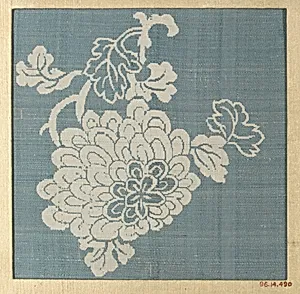
This exquisite silk textile fragment, titled simply *Piece*, hails from Japan's Edo period (16151868), a time of remarkable artistic flourishing and urban sophistication. Woven in the 18th or 19th century, small 6 x 5 3/4-inch square showcases the era's mastery of silk production, likely featuring delicate leaf motifs that evoke the natural beauty so revered in Japanese aesthetics. During the Edo period, silk weaving reached new heights, with artisans using complex loom techniques to integrate intricate patterns directly into the fabric, eliminating the need for additional embroidery. The leaf designs symbolize seasonal change and harmony with nature, core themes in Japanese culture, and reflect the period's prosperity fueled by thriving silk industries in regions like Kyoto's Nishijin district. Textiles like this were prized for kimonos, furnishings, and ceremonial garments, embodying *wabi-sabi*—the appreciation of imperfection and transience. A generous gift to the Metropolitan Museum of Art from Mr. and Mrs. H. O. Havemeyer in 1896, this anonymous work highlights the global admiration for Edo artistry. Though its exact use remains a mystery, it invites us to ponder the skilled hands that wove poetry from silk threads centuries ago.