
Piece
Unknown Artist
18th–19th century
Medium
Silk
Dimensions
12 3/4 x 7 in. (32.38 x 17.78 cm)
Classification
Textiles-Woven
Culture & Period
Japan · Edo (1615–1868)
Department
Asian Art
Museum
Metropolitan Museum of Art, New York, NY
Credit
Gift of Mr. and Mrs. H. O. Havemeyer, 1896
Accession Number
96.14.501
Rights
Public Domain
Art Historical Context
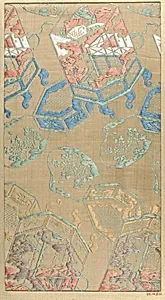
This exquisite silk textile fragment, dating to Japan's Edo period (1615–1868), offers a glimpse into the refined artistry of 18th- to 19th-century weaving traditions. Measuring just 12¾ x 7 inches, woven piece exemplifies the meticulous craftsmanship of Japanese textile production during a time of relative peace and prosperity, when urban culture flourished in cities like Edo (modern Tokyo). Silk, prized for its luster and durability, was a luxury material often used for kimonos, obi sashes, or ceremonial garments, reflecting the era's emphasis on elegance and social status. Woven textiles like this one highlight advanced Japanese techniques, such as intricate patterning achieved through looms that interwove dyed threads for subtle motifs—possibly floral, geometric, or scenic designs common in Edo-era fabrics. These pieces were not merely functional but served as wearable art, embodying aesthetic principles like *wabi-sabi* (beauty in imperfection) and harmony with nature. Their cultural significance lies in everyday life and festivals, where textiles conveyed identity, wealth, and seasonal beauty. A generous gift to the Metropolitan Museum of Art from Mr. and Mrs. H. O. Havemeyer in 1896, this fragment joins a rich collection of Asian art, inviting visitors to appreciate the tactile poetry of Japan's textile heritage.