
Piece
Unknown Artist
18th–19th century
Medium
Silk
Dimensions
3 x 5 3/4 in. (7.62 x 14.61 cm)
Classification
Textiles-Woven
Culture & Period
Japan · Edo period (1615–1868)
Department
Asian Art
Museum
Metropolitan Museum of Art, New York, NY
Credit
Gift of Mr. and Mrs. H. O. Havemeyer, 1896
Accession Number
96.14.535
Rights
Public Domain
Art Historical Context
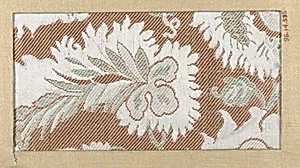
This delicate silk textile fragment, simply titled *Piece*, hails from Japan's Edo period (1615–1868), a time of remarkable peace and cultural flourishing under the Tokugawa shogunate. Measuring just 3 x 5¾ inches, it exemplifies the exquisite craftsmanship of Japanese woven textiles, produced in urban centers like Kyoto and Nishijin. During the 18th–19th centuries, silk weaving reached new heights of sophistication, with artisans employing intricate techniques such as jacquard-like patterning on the loom to create subtle textures and motifs inspired by nature, seasons, or daily life. As a woven silk piece, it reflects the era's economic prosperity and demand for luxurious fabrics used in kimonos, obi sashes, and ceremonial garments. Edo textiles were not merely functional; they embodied cultural values of harmony, refinement, and impermanence (mono no aware), often featuring symbolic designs like cherry blossoms or cranes. Though the specific design details are not recorded, its survival highlights the durability and artistry of these materials, prized by collectors worldwide. Generously gifted to the Metropolitan Museum of Art in 1896 by Mr. and Mrs. H. O. Havemeyer, renowned patrons of Asian art, this modest fragment invites us to appreciate the unsung mastery of anonymous Edo weavers—true architects of Japan's textile legacy.