
Piece
Unknown Artist
18th–19th century
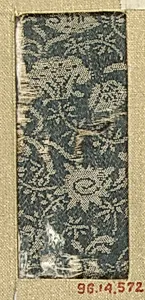
Medium
Silk
Dimensions
2 1/2 x 1 in. (6.35 x 2.54 cm)
Classification
Textiles-Woven
Culture & Period
Japan · Edo period (1615–1868)
Department
Asian Art
Museum
Metropolitan Museum of Art, New York, NY
Credit
Gift of Mr. and Mrs. H. O. Havemeyer, 1896
Accession Number
96.14.572
Rights
Public Domain
Art Historical Context
This delicate silk fragment, simply titled *Piece*, hails from Japan's Edo period (16151868), a time of relative peace and cultural flourishing under the Tokugawa shogunate. Measuring just 2½ x 1 inches, it exemplifies the exquisite scale of Japanese textile artistry, likely a remnant from a larger garment like a kimono or obi. During the Edo era, urban centers like Kyoto and Edo (modern Tokyo) buzzed with perfecting woven silks for everyday wear, festivals, and social display, reflecting Japan's sophisticated appreciation for beauty in the mundane. Crafted in woven silk—a medium prized for its luster, durability, and capacity for intricate patterns—this tiny textile showcases advanced techniques developed over centuries. Edo weavers employed looms to create fine structures, often incorporating subtle motifs inspired by nature, seasons, or auspicious symbols, though the exact design here remains a tantalizing mystery. Silk production was a labor-intensive art, symbolizing status and refinement in a society where clothing conveyed identity and hierarchy. Generously gifted to the Metropolitan Museum of Art in 1896 by Mr. and Mrs. H. O. Havemeyer, renowned collectors, this piece invites us to marvel at Japan's textile legacy. Though small, it whispers of the ingenuity that made Edo crafts enduring treasures, bridging personal adornment with profound cultural expression.