
Piece
Unknown Artist
18th–19th century
Medium
Silk
Dimensions
7 3/4 x 5 1/4 in. (19.68 x 13.34 cm)
Classification
Textiles-Woven
Culture & Period
Japan · Edo period (1615–1868)
Department
Asian Art
Museum
Metropolitan Museum of Art, New York, NY
Credit
Gift of Mr. and Mrs. H. O. Havemeyer, 1896
Accession Number
96.14.612
Rights
Public Domain
Tags
Art Historical Context
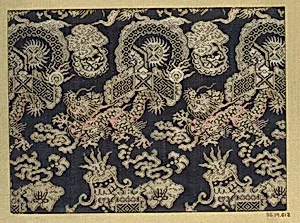
This exquisite woven silk textile, simply titled *Piece*, hails from Japan's Edo period (1615–1868), a time of relative peace and cultural flourishing under the Tokugawa shogunate. Crafted in the 18th–19th century, this small fragment measures just 7 3/4 x 5 1/4 inches, likely part of a larger garment, accessory, or decorative item. Its delicate silk medium showcases the mastery of Japanese weavers, who transformed raw threads into intricate patterns through sophisticated loom techniques, prized for their luster, durability, and ability to capture vibrant motifs. At the heart of this artwork are dragons, powerful symbols in Japanese culture representing imperial authority, strength, and good fortune. Often associated with water, weather, and protection, these mythical creatures were popular in Edo-era textiles, reflecting the era's fascination with nature's forces and folklore. Woven silk like this was a luxury good, traded along bustling routes and worn by samurai or merchants, blending artistry with everyday elegance. A generous gift to the Metropolitan Museum of Art from Mr. and Mrs. H. O. Havemeyer in 1896, this piece offers a window into Japan's textile heritage, highlighting how even modest fragments preserve the ingenuity of anonymous artisans.