
Piece
Unknown Artist
18th–19th century
Medium
Silk
Dimensions
7 x 5 in. (17.78 x 12.70 cm)
Classification
Textiles-Woven
Culture & Period
Japan · Edo period (1615–1868)
Department
Asian Art
Museum
Metropolitan Museum of Art, New York, NY
Credit
Gift of Mr. and Mrs. H. O. Havemeyer, 1896
Accession Number
96.14.626
Rights
Public Domain
Tags
Art Historical Context
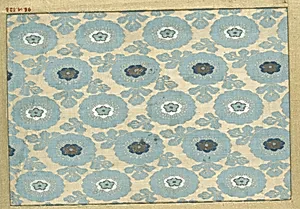
This exquisite silk textile fragment, measuring a modest 7 x 5 inches, hails from Japan's Edo period (1615–1868), a time of relative peace and prosperity that fostered remarkable advancements in craftsmanship. Woven with precision, this small "Piece" by an unknown artist features delicate leaf motifs, evoking the natural beauty so revered in Japanese aesthetics. Donated to the Metropolitan Museum of Art in 1896 by Mr. and Mrs. H. O. Havemeyer, it exemplifies the intricate woven textiles produced during this era, when silk weaving reached new heights of sophistication. In Edo-period Japan, textiles like this were integral to daily life and fashion, adorning kimonos and furnishings for the growing merchant class. The use of silk—a luxurious fiber prized for its luster and durability—highlighted technical mastery in looms that created patterned weaves without dyes bleeding, allowing motifs like leaves to emerge in subtle, harmonious designs. Leaves often symbolized renewal, the passage of seasons, and the ephemeral beauty of nature (mono no aware), core themes in Japanese culture. This fragment offers a window into that refined world, inviting us to appreciate the quiet artistry of everyday elegance.