
Piece
Unknown Artist
18th–19th century
Medium
Silk
Dimensions
6 1/4 x 4 1/4 in. (15.88 x 10.80 cm)
Classification
Textiles-Woven
Culture & Period
Japan · Edo period (1615–1868)
Department
Asian Art
Museum
Metropolitan Museum of Art, New York, NY
Credit
Gift of Mr. and Mrs. H. O. Havemeyer, 1896
Accession Number
96.14.644
Rights
Public Domain
Tags
Art Historical Context
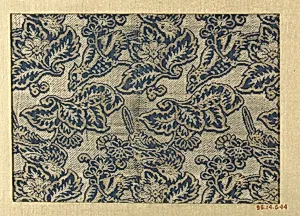
This delicate silk textile fragment, titled simply *Piece*, hails from Japan's Edo period (16151868), a time of relative peace and cultural flourishing under the Tokugawa shogunate. Measuring just 6¼ x 4¼ inches, it exemplifies the exquisite craftsmanship of woven textiles produced during this era, when silk weaving reached new heights of refinement. Donated to the Metropolitan Museum of Art in1896 by Mr. and Mrs. H. O. Havemeyer, it resides in the Asian Art department, a glimpse into everyday luxury and artistic innovation. Woven from fine silk threads, the piece showcases the sophisticated *kasuri* or plain-weave techniques common in Edo-period Japan, where artisans manipulated fibers to create subtle patterns. The motif of leaves—evident from its tagging—reflects the Japanese reverence for nature, symbolizing seasonal change and the transient beauty of life (*mono no aware*). Such small fragments often came from larger garments like kimonos or noren curtains, blending functionality with aesthetic poetry. As a testament to Japan's textile heritage, this artwork highlights how Edo artisans transformed silk into wearable art, influencing global fashion and design. Visitors can appreciate its tactile elegance up close, evoking the serene gardens and vibrant markets of 18th–19th-century Japan.