
Piece
Unknown Artist
18th–19th century
Medium
Silk
Dimensions
5 x 5 1/2 in. (12.70 x 13.97 cm)
Classification
Textiles-Woven
Culture & Period
Japan · Edo period (1615–1868)
Department
Asian Art
Museum
Metropolitan Museum of Art, New York, NY
Credit
Gift of Mr. and Mrs. H. O. Havemeyer, 1896
Accession Number
96.14.668
Rights
Public Domain
Art Historical Context
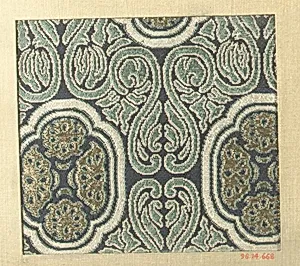
This delicate silk textile fragment, simply titled *Piece*, hails from Japan during the Edo period (1615–1868), specifically the 18th–19th century. Measuring just 5 x 5½ inches (12.70 x 13.97 cm), it the precision and refinement of Japanese woven textiles, a craft central to daily life and high fashion. Produced by an unknown artisan, such small pieces were often samples, patches, or elements from larger garments like kimonos, showcasing silk's luxurious sheen and durability. The Edo era marked a time of prolonged peace under the Tokugawa shogunate, spurring economic prosperity and artistic innovation across crafts. Silk weaving flourished in regions like Kyoto and Nishijin, where weavers mastered complex looms to create intricate fabrics. This woven silk piece reflects those techniques, valued for their tactile quality and role in expressing social status, seasonal motifs, or cultural narratives through pattern and dye. Generously gifted to the Metropolitan Museum of Art in 1896 by Mr. and Mrs. H. O. Havemeyer, this artifact invites us to appreciate Japan's enduring textile legacy. In the Asian Art department, it stands as a tangible link to an era when everyday artistry elevated silk into symbols of beauty and ingenuity.