
Piece
Unknown Artist
18th–19th century
Medium
Silk
Dimensions
6 1/4 x 4 1/4 in. (15.88 x 10.80 cm)
Classification
Textiles-Woven
Culture & Period
Japan · Edo (1615–1868) or Meiji period (1868–1912)
Department
Asian Art
Museum
Metropolitan Museum of Art, New York, NY
Credit
Gift of Mr. and Mrs. H. O. Havemeyer, 1896
Accession Number
96.14.679
Rights
Public Domain
Tags
Art Historical Context
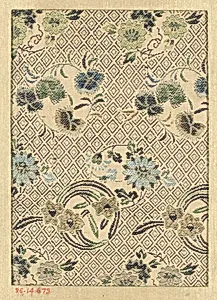
This exquisite silk textile fragment, titled simply *Piece*, hails from Japan during the 18th or 19th century, the refined Edo period (1615–1868) or the transformative Meiji era (1868–1912). Measuring just 6¼ x 4¼ inches, it exemplifies the delicate scale of woven samples often preserved from larger garments like kimonos or obi sashes. Acquired as a gift from Mr. and Mrs. H. O. Havemeyer 1896, it resides in the Metropolitan Museum of's Asian Art Department, showcasing early Western fascination with Japanese craftsmanship. Woven from luxurious silk, this artwork highlights Japan's mastery of textile techniques, where intricate patterns—here featuring floral motifs—were achieved through complex looms. Flowers held deep cultural significance in Edo and Meiji Japan, symbolizing seasonal beauty, impermanence, and harmony with nature, often adorning everyday and ceremonial wear. Such pieces reflect the period's booming silk industry in regions like Kyoto and Nishijin, where weavers innovated with jacquard-like methods for vibrant, durable designs. Though the artist remains unknown, this modest fragment captures the poetic elegance of Japanese textiles, bridging artistry and daily life in a time of artistic flourishing. A true gem for contemplating the interplay of texture, color, and symbolism.